On the shores of Lake Tanganyika in the early 1960s, a young woman sat quietly in the forests of Gombe. She was not armed with the tools of traditional science but with something far more powerful: patience, curiosity, and empathy. That woman was Jane Goodall and from the moment she watched a chimpanzee strip a twig to fish termites from their nest, the world’s understanding of our closest relatives changed forever.
Jane Goodall has now passed on, but her legacy lives in every forest she fought to protect, every young conservationist she inspired, and every living being we see not as “other,” but as kin.
Breakthroughs That Changed Science
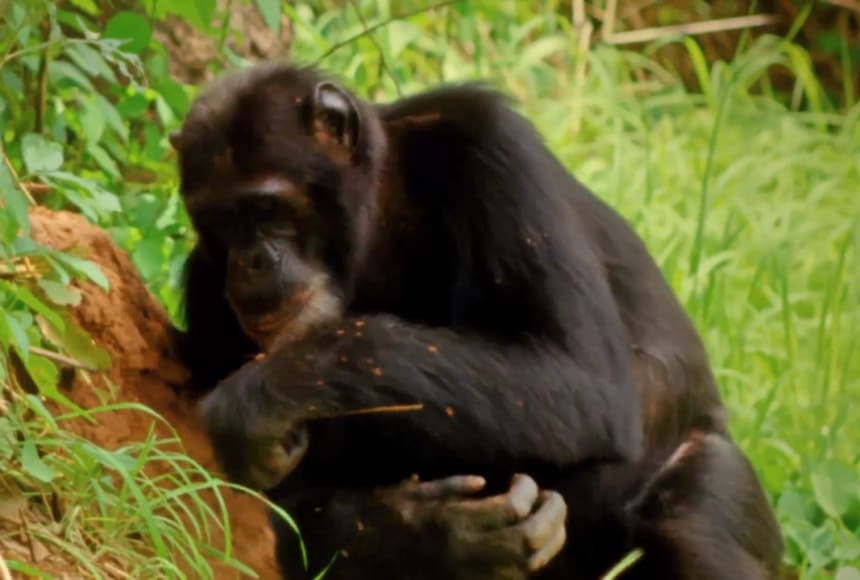
Tool Use in Chimpanzees
Before Jane, science taught that tool-making was uniquely human the defining line of our intelligence. But in 1960, she watched “David Greybeard,” a chimpanzee, modify a branch to catch termites. That single observation shattered the idea of human exclusivity and forced the scientific world to redraw the boundaries of intelligence.
Social Complexity & Emotions
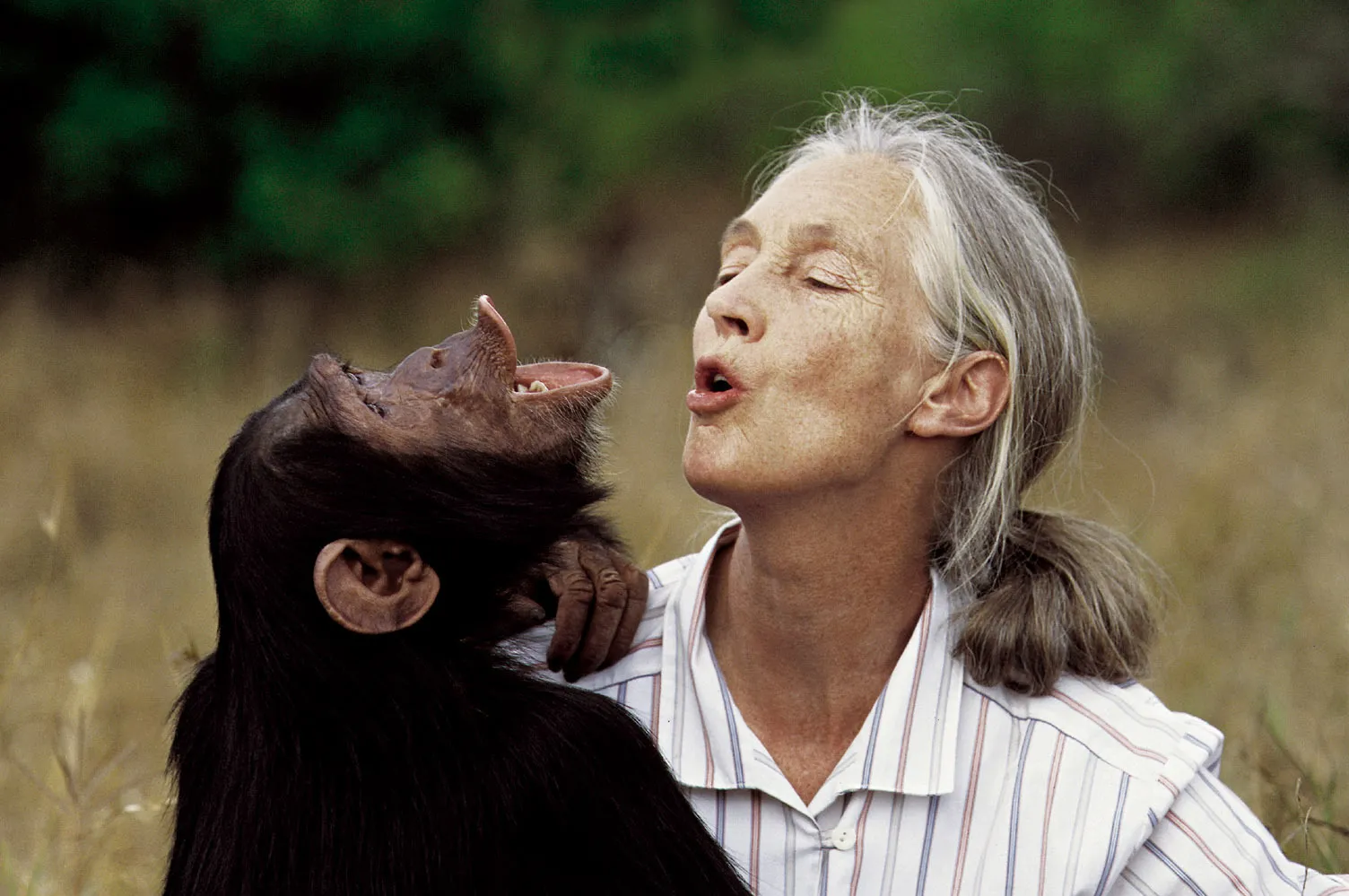
Jane’s long-term studies revealed that chimpanzees weren’t just clever; they were emotional, social beings. They embraced after long separations, mourned their dead, and formed intricate alliances. They knew affection, grief, and ambition. Her observations forever dismantled the myth that non-human primates lived in a purely instinctive world.
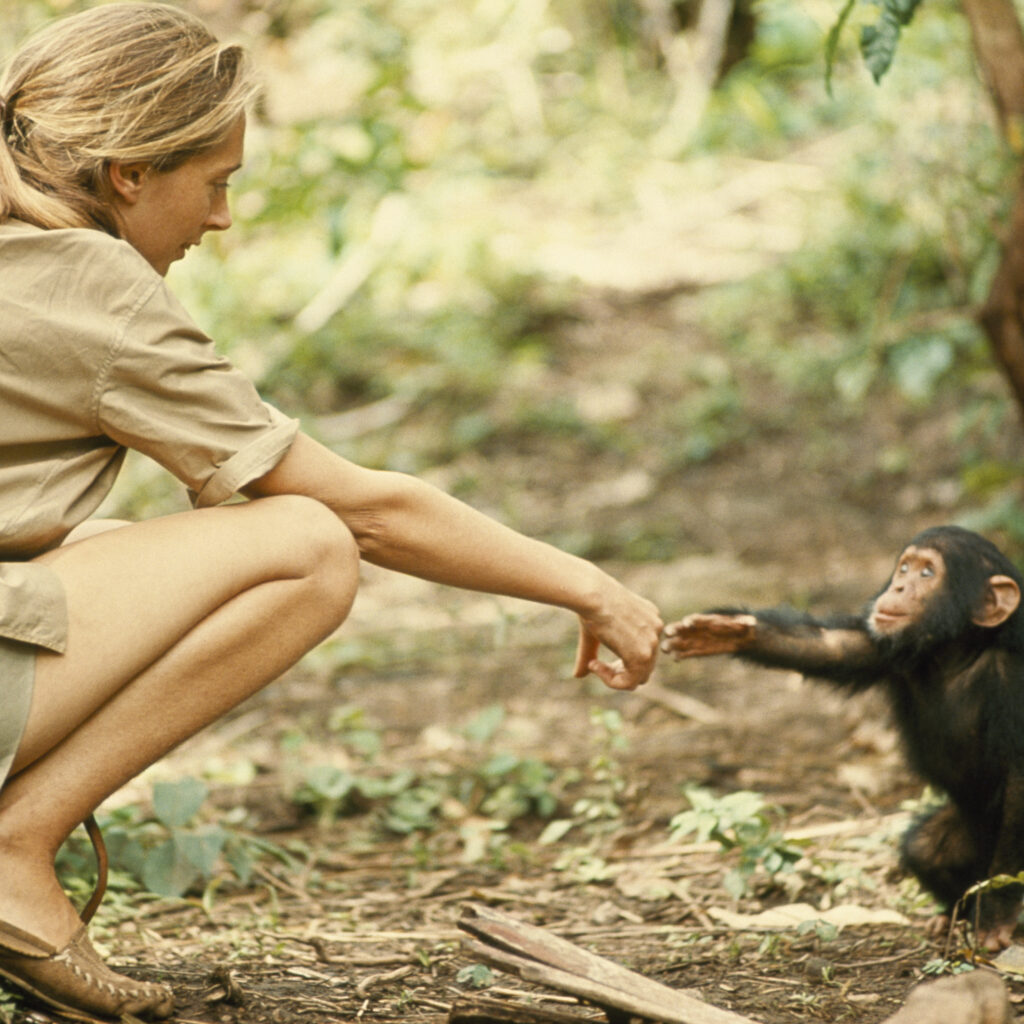
A New Kind of Science
Where other researchers numbered individuals, Jane named them. Where others kept a cold distance, she allowed herself empathy. Critics called it unscientific at the time, but today her approach is recognized as visionary. By refusing to strip chimpanzees of individuality, she reshaped how field research is conducted blending rigor with compassion.
Highlights of her breakthroughs:
- First to prove tool-making in chimpanzees.
- Documented emotional depth and political power struggles among primates.
- Pioneered an empathetic, patient, human-centered model of fieldwork.
Beyond Science: The Advocate
Jane could have stayed in the forest, but she chose to step onto the global stage when she realized chimpanzees’ survival was at risk. She founded the Jane Goodall Institute, which continues to safeguard primate habitats and pioneer community-centered conservation.
She launched Roots & Shoots, a youth program that empowers young people in over 100 countries to care for people, animals, and the environment. And she became a UN Messenger of Peace, using her gentle voice to rally action on deforestation, climate change, and species decline.
Her genius was not just in observation, but in communication — she made the world care.
What Comes Next for Wildlife Conservation
Jane’s death marks the end of an era, but her vision points us forward. The question now is: how do we build upon her legacy?
Community-Led Conservation
Jane believed conservation couldn’t succeed without people. Protecting forests required lifting up the communities who lived around them. Today, more projects across Africa follow this model, ensuring that tourism revenue, education, and jobs flow to local families while safeguarding primates and other wildlife.
Rethinking Our Place Among Animals
Her discoveries blurred the line between human and animal. As habitat loss accelerates and climate pressures grow, her legacy reminds us to see chimpanzees and by extension, all animals not as resources but as relatives sharing one fragile planet.
Inspiring the Next Generation
Through Roots & Shoots, Jane placed her hope in the hands of young people. The next chapter of conservation will be written by them with new tools like AI tracking, drones, and camera traps, but always guided by her ethic of empathy and respect.
A Legacy of Hope
Even in her final years, Jane’s words were filled with optimism:
“We still have a window of time. We still have a chance to change the future.
She leaves behind not only a body of scientific knowledge but a way of seeing the world — one where respect, patience, and compassion bridge the distance between species.
Her life reminds us that science can be kind, conservation can be hopeful, and every person has the power to make a difference.
Rest well, Jane Goodall.
Your voice will echo in every forest, and your hope will live on in generations to come.